
Classy Keys Program
Welcoming Environment
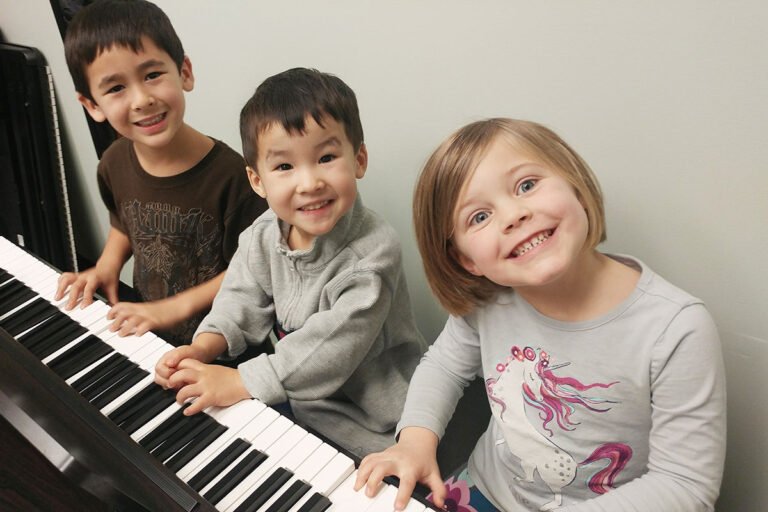
Classy Keys excels at creating a supportive, kind environment where it is safe to grow and learn, and mistakes are welcomed. We also teach self-mastery, and encourage students to be responsible for their own practicing and progress, using clear, concise practicing pages, and showing progression through specific mastery concepts.
Lasting Human Connections
Music stirs the soul and unites all kinds of people. It is called ‘the universal language’ because it is created and understood by every human culture. Classy Keys recognizes this powerful and beautiful aspect of music, and actively supports it by teaching students to connect with others through group singing and playing, conducting and accompanying, duets, composing and improvising together, and our favorite – taking piano lessons together!
Composition and Structure
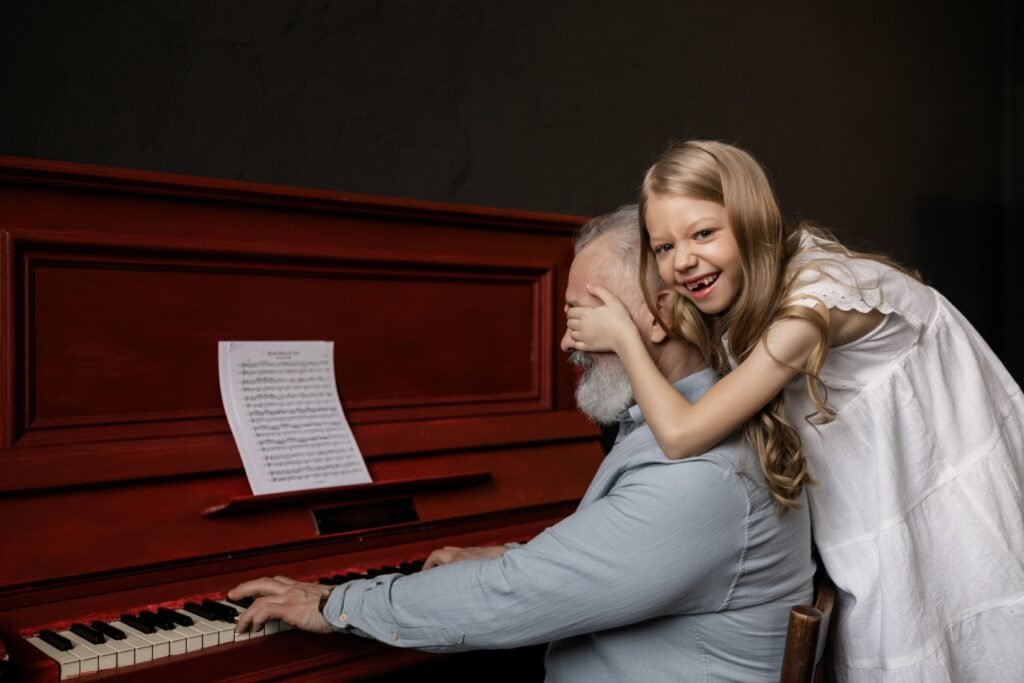
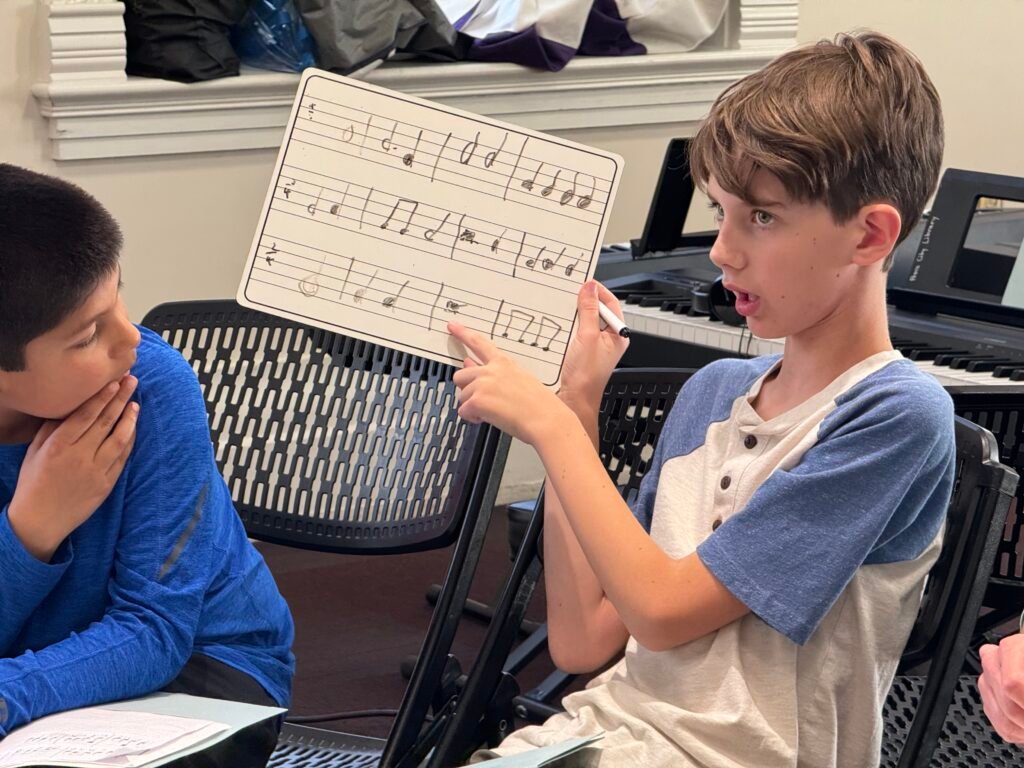
Uniquely, Classy Keys teaches songwriting and composition right from the first. We believe that learning the chords, patterns, and structural elements of music from the beginning, gives students an advantage in comprehending music as a whole. Besides, its just so incredibly fun to tap in to your own soul and create something beautiful!
The ClassyKeys Program
Core Values
We provide a program that helps each student to:
- Experience a rich and holistic musical program within a delightful, kind and supportive environment.
- Develop the capacity to play with proficiency, intuition and grace.
- Comprehend the composition and structure of music, using chords, patterns, and creativity.
- Employ music as a vehicle to create strong, lasting connections through singing and playing together, accompanying, conducting, expressing, creating and performing.
- Experience the deep joy inherent in expanding and developing the inner self through the power of music.
Curriculum Elements
Students who take the ClassyKeys Program find a unique and engaging set of tools and games to make learning fun! Along with teaching expertise in playing rhythms and notes, ClassyKeys also includes the underlying structure and intuitive nature of music, right from the beginning, with innovative tools like Alphabet Soup Chord Songs, which allow beginning students to play with both hands from the first week. Our Program also highlights writing orginal songs, and making connections with others through collaboration, conducting, improvising, accompanying and playing duets together. It is truly a comprehensive system that educates the whole musician!
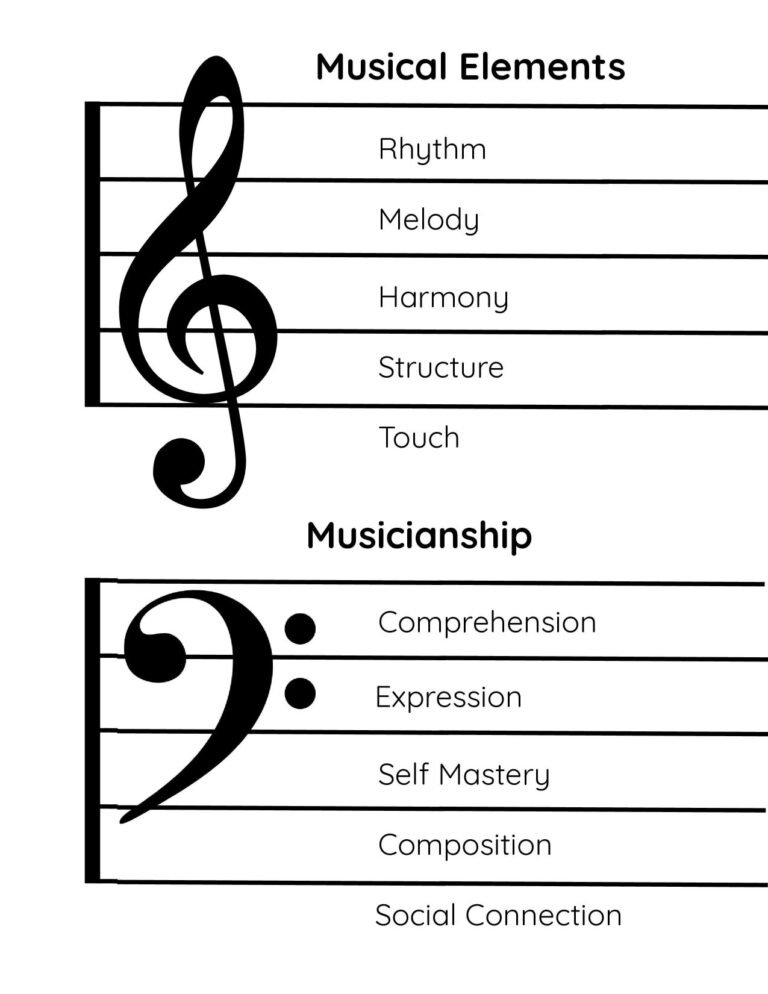
Musical Elements
Rhythm
- Copy rhythms and drum beats
- Beat vs. Melody rhythms
- Pizza Rhythm flash cards
- Whole, Half, Quarter and Eighth notes
- Whole, Half, Quarter and Eighth Rests
- Clapping to Flashcards
- Translate to Keys – Count out loud 1&2&3&4&
- Hearing rhythms in songs
- Rhythm Cards –
- Clap
- Organize about four cards and play them; Mix them up and play again (preference)
- Match to the rhythm they are hearing in the song (play familiar YouTube songs)
- Use difficult cards to create a song using that measure in homework
- Measures
- Tempo
- Keeping to an outside beat
- Time signatures 2/4, 3/4 4/4
- Dotted Halves
- Swing rhythm+
- Marches
- Cut Time; Common Time
- 16th Notes and dotted 16ths and rests
- Triplets
- 32nd, 64th notes and rests
- Counter rhythms
- Dotted Quarters
- Syncopation – push beats
- Polyrhythm
- Count with your thumb (left is on the count and right is “and”)
Melody
- Piano Keyboard Patterns
- Musical Alphabet – 7 Notes – count up alphabet from first key – last key; find C
- Two House – Small House, Large House
- Dog, Cat, Elephant
- Two Black notes between C-D-E song
- FGAB – Front Door, Back Door, F F B B, What’s in the middle? Granny Annie!
- Steps and Skips
- Contrary Scale – 1-2-3; 3-2-1
- Parallel 5 Finger Scales 1-5 Finger Numbers
- Transpose 5 Finger Scales
- Arpeggios (Rainbows) –
- Crossover 2
- Tucking thumbs
- Crossed hands
- Sharps and flats
- 1 octave scales – major and minor
- 2 Octave Scales
- Kinds of Scales
- Major
- Minor
- Pentatonic
- Chromatic
- Harmonic Minor (Eastern)
- Ledger line notes
- Middle
- Above Staff
- Below Staff
- Scales in all different keys
- Black note scales
- (Note) Whole, whole, half, whole, whole, whole, half
Harmony
- Steps and skips
- Double skips
- Two notes on one stem – played together
- Intervals – 2nds, 3rds, 4ths, 5ths, 6ths, 7ths,
- Octaves
- Arpeggios (Rainbows)
- Chord Inversions (with Legos)
- 2 Note Chords (C, F, G)
- 14 Chord Simple Songs
- Circle of 5ths
- Chords
- Diminished
- Sustained
- 6ths, 7ths
- Minor 6ths and 7ths
- Augmented
- Different bass note
- Tonic – Home
- Dominant – V7
- Triads
- Extended 9ths and 11ths
- Consonant, dissonant
- Resolution, unresolved
- Primary Chords
- Chord Progressions
- Lead Sheets
- Blocked Chords, Broken Chords
- Rounds
Structure
- Middle C position – 2 thumbs on c, and left 5 on C
- C Position LH5 on Bass C, RH1 on Middle C
- Middle G position – 2 thumbs on g, and left 5 on C
- Hand Position Shifts
- Staff
- Intro to Staff
- Grand Staff – Floor Staff
- C’s, G’s and F’s – Anchor notes
- Floor staff, Whiteboard and keyboard
- Beady – B’s and D’s – Bird on the branch; Dogs digging worms
- Steps and Skips
- Double skips
- Naming Notes (or solfeggio)
- Sharps and flats
- Fundamental Patterns (Scales, Chords, Arpeggios, etc.)
- Time signatures 2/4, 3/4 4/4
- Time signatures – 3/8; 6/8
- Measures
- major and minor
- Transposing – C and G
- Half Steps, Whole Steps Formula (with octave scales)
- Primary chords in all keys – I, IV, V7
- Form – AB, ABA, AABB, etc.
- Repetition
- Intro, verse, pre-chorus, chorus, bridge, outro, clear
- Phrasing
- Motifs
- Use the whole keyboard
- Counterpoint – two melodies played simultaneously.
- Imitation (repeating melody in a different voice or part)
- canon
- fugue
- circle of 5ths (number of sharps or flats in each key)
Touch
- Posture
- Sitting
- L-Shaped Arms
- Karate Chop Arms
- Dancing on Fingertips
- Pecking rooster and hens – practice with each finger combined with thumb
- Dynamics
- Ties and slurs
- Double bar line
- Repeat
- Staccato- legato
- 8va and 8vb; 15va and 15vb
- P, pp, ppp, f, ff, fff
- Crescendo and Decrescendo (alligator jaws)
- Fermata – Bird’s Eye
- Grace notes
- Ritardando
- Ostinato
- Trills of different fingers
- Glissando
- Sforza
- Vacillating between two notes (like an octave)
- Volume
- Finger numbers
- Thumbs are ones
- Twos Threes etc
- Fingering
- Hand Positions
- Smooth and Steady
- Pedaling
- Damper pedal (sustained pedal – because it lifts the felts [dampers] off the strings and allows the strings to vibrate)
- Soft pedal
- 1 octave arpeggios – over – under wrist pattern
- Coda, DC al fine; Fine;
- Relaxation – Loosening tension
Musicianship
Comprehension
- The Piano What is it? – describe the piano action – when you play a note the hammer inside strikes a string percussion-string instrument
- Feeling the spaces between the notes – finding each note
- Inner Ear
- Hearing Low, Middle and High notes on the keyboard
- Hearing Direction of travel on the keyboard
- Hearing Major and Minor
- Hearing Intervals – 2nds, 3rds, 4ths, 5ths, 6ths, 7ths, Octaves
- Pitch – show with arm
- Chords
- How does it feel in your body?
- What do you enjoy hearing or feeling under your fingers?
- What is the music saying?
- Perspective expansion – going to opera, ballet, concert, orchestra, etc.
- Draw the music
- Ability to deconstruct and reconstruct a song – show the elements
- Learning how to enjoy music
- Understanding the soul of a song
Expression
- Phrasing
- Pedals Damper pedal (sustained pedal – because it lifts the felts [dampers] off the strings and allows the strings to vibrate)
- Genres; Blues, jazz, boogies, ballads, rock, classical, popular, ragtime
- Beauty
- Raising the hands softly
- Imbuing emotion
- Dynamics (see Touch)
- Artistry
Self-Mastery
- How to practice
- Confidence in the process of my learning
- Giving grace to myself – ok to make mistakes
- Separating it from one’s worth
- Patience with the time it takes
- Ability to see one’s own growth
- Shared attention with myself – learning where my attention is at
- Nervous system regulation
- Intrinsic motivation
- Finds own joy and reason for piano
- Knows own style and genre preferences
- Sustained, consistent autonomous practice
- Building Rituals
- Integrating music into daily life
- Learning how to give myself my next step (I see that this has room to grow)
- How does it feel in your body?
- What do you enjoy hearing or feeling under your fingers?
- Musical Voice, Personal style
- Curiosity and wonder mindset
- Curiosity in my creativity- Learning how to build the well
- Muscle Memory
- Playing from the soul
Composition
- Rhythm Cards
- Note Cards
- Chord Progressions
- Lyrics
- Transcription
- Alternate left hands
- Broken chords
- Blocked Chords
- Alberti bass,
- boogie beats, etc.
- walking bass
- swing
- Playing by Chords (left hand and right hand)
- Lead Sheet Improvisation
- Phrasing
- Musical Form AB; ABA, Bridges,
- Chord fluidity
Social Connection
- Integrating it into social life –
- How to invite people to gather
- Duets
- Address songs
- Plays, musical theatres
- Accompaniment
- Improv – jazz
- Soundtracks
- Conducting
- Group singing
- Choirs
- Bands
- Collaboration
- Performance
- Self Assurance – its fine however it turns out
- Nervous system regulation
- Breathing techniques – take your time to settle
- Find your hand position
- Including the audience – social presence
- Reading an audience
- Performance etiquette
- Keep moving forward
- How to support others – Being a good sport – team spirit